“When leaders at all levels take good career guidance seriously, lives can be transformed.”
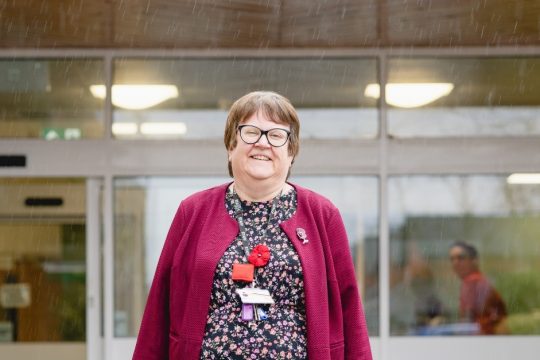
Anna Dawe OBE, Principal and CEO of Wigan and Leigh College, explains how careers guidance, underpinned by the Gatsby Benchmarks, helps prevent young people from becoming NEET by raising aspirations, removing barriers and guiding learners towards successful futures. Anna Dawe
Anna DaweCEO and Principal, Wigan & Leigh College
What role do the Gatsby Benchmarks play in helping prevent young people from becoming NEET?
When good careers guidance, underpinned by the Gatsby Benchmarks, is a strategic priority for senior leaders, it transforms lives and it transforms opportunity. It has huge impact on individuals, but also wider society, the workplace and the economy. Without a doubt, careers guidance serves both our individual students and the community.
We’re incredibly proud of the work we do to prevent young people from becoming NEET and that our NEET rates are below the national and regional average. Quality careers guidance – and the transformative effect it has – is absolutely central to that. It’s a key part of our toolkit.

How can a strong careers programme help keep young people in education, training and employment?
We have low NEET figures because our young people understand every pathway and we support them into those pathways. They don’t just see one option, they see academic routes, technical qualifications, apprenticeships. They go on into higher education not just automatically thinking they have to do a degree. They’re getting placed in sectors that might otherwise be difficult to get into or that initially they might not feel are options for them. But good careers guidance removes barriers and opens them up.
When young people are engaged and encouraged to think about their next steps at Key Stage Four, schools and colleges, working together, can unpack the range of courses available that match the skills the students have and that are aligned to their future dreams and ambitions. Then they begin to see a clear pathway that will get them there, that they’re going to thrive in, and that they’re going to be retained in.
How does careers provision in your college help tackle disadvantage and disengagement?
Careers guidance is a vital part of keeping our students engaged, raising aspiration and removing barriers to opportunity. We strive to make it individualised and our teams are trained to recognise and respond to diverse needs.
For learners who could be described as either disadvantaged or disengaged, it is about providing them with something bespoke, something that meets their specific needs and that is layered on top of what all young people are universally entitled to. We’re looking for the things that resonate for that particular young person, that remove barriers or spark something in them – something that makes them think: “That’s it, that’s what I want to do. That’s my target, my goal.”
When you align that tailored approach with ongoing careers guidance that evolves as the young person progresses along their journey, it has far more impact.

What does a culture of careers guidance look like at Wigan & Leigh College?
When careers guidance is championed from the very top, and throughout an organisation, it becomes one of the most powerful tools you can have in education to improve outcomes for young people.
Where you have this type of culture of careers guidance throughout the college, it means that in all interactions, young people get a flavour of what careers guidance is. It’s about engaging our young people in a way that inspires them, that sets an ambition, but also that makes it realistic, so they feel supported and scaffolded on that journey. It means that young people can see the meaning of learning and can see their end goal.
From when a young person comes to see us at an open event, to making an application, to their interview, careers guidance is always in each interaction, because that is what we’re all about. We are getting those young people closer to the workplace, to their career, to what they want to do in life that will see them thrive.
We deliver courses fundamentally, but careers guidance takes what we do so much further – it means we deliver aspiration, opportunity, careers and dreams. If we didn’t have our careers guidance, people would come here and do a course and then they would leave. It’s the careers guidance that puts them in the right place at the end of that course. That’s our job – to set them up for the future, for life beyond college.
So, when they’re not young people anymore, they can still draw on those skills and that confidence that if something takes a turn in a different direction, if their career needs to change, if their plan for their working life does not stay as they thought it would. They’ll know what to do – to go away and replan, reset, readjust, gather information and make the most of it. It’s something that I hope will stay with them the whole way through their working years so that they can re-engage with learning, they can change direction, they can upskill and they can reskill when they need to.
More from Anna
“Careers guidance gave me a passion to learn and it gave me a future.” Anna and former student, Cristiano, talk about how timely careers guidance set Cristiano on a new path.
Anna and Cristiano join other students and their principals to explain how making careers guidance a senior leadership priority helps keep young people in education, employment and training – watch our short film.
Anna explains more about how good careers guidance improves motivation, behaviour, attendance and attainment at the college she leads.