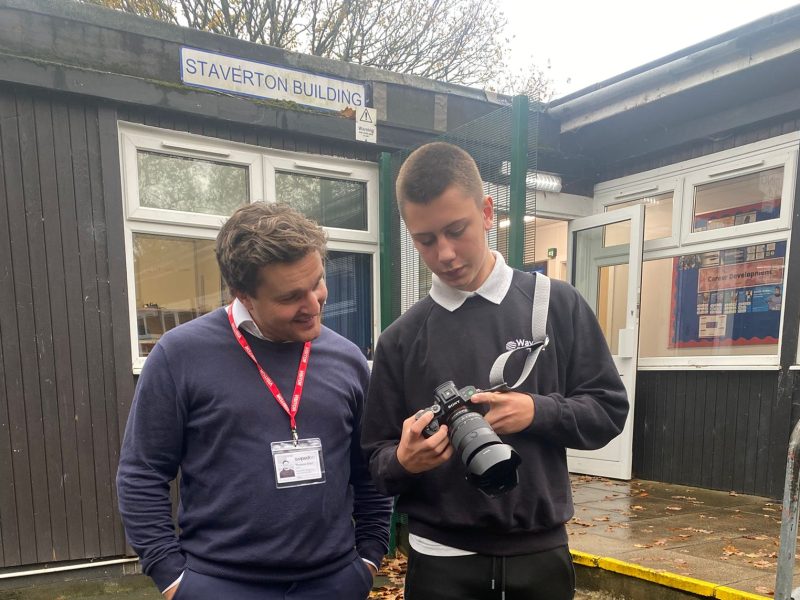
During some filming on-location at institutions in different parts of the country, we had students taking part in work experience onsite with the production company. I was, for a change, on the employer side – responsible for ensuring the day was meaningful for the student (working closely with the careers leaders) as well as the organisation.
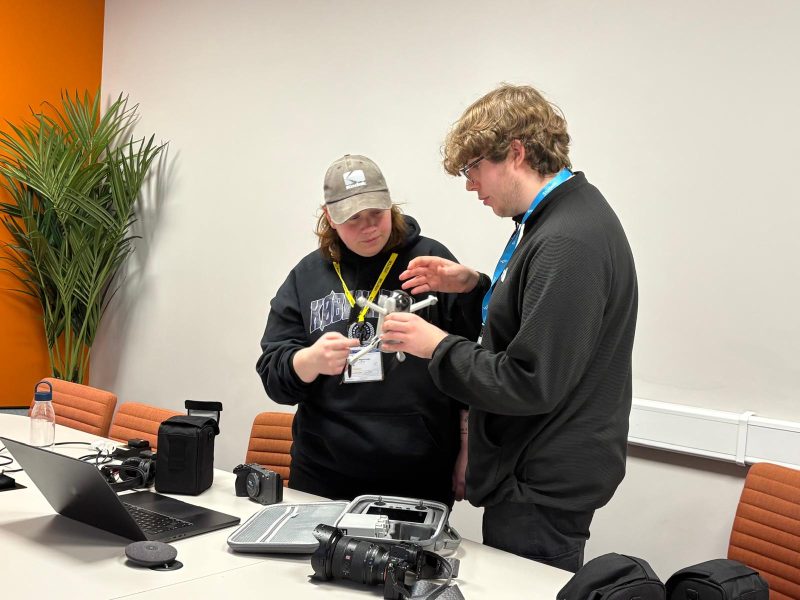
What struck me was how simple the process became once everyone was aligned. The production team spoke with the student from the outset about what they were interested in and what they hoped to gain. The task given to the student on the day was authentic rather than manufactured to ensure buy in from both sides and even featured one student operating a drone to capture aerial shots of the location. Throughout, there was consistent two-way conversation – questions, feedback, encouragement, explanation. The student wasn’t a visitor at the edge of the room; they were part of creating content.
I left that experience invigorated and genuinely heartened. The young person’s agency and input were critical – because meaningfulness is not something we do to students, it is something we build with them. When young people feel ownership, they engage more deeply, learn faster, and take away insights that shape their next steps. But, crucially, it was heartening to see this achieved in two vastly different settings, one a major FE provider with students in the thousands and another an AP with fewer than twenty.
A modern movement toward fairness and inclusion
The Careers & Enterprise Company’s “Let’s Make It Work” campaign calls for a modern model of work experience that is fairer, more useful, and more inclusive for everyone. This builds on the updates to the Gatsby Benchmarks we published in 2024 and the subsequent statutory guidance from the government on careers education, structured around the refreshed benchmarks.
Making work experience meaningful
When the updated statutory guidance on careers was published last May, I welcomed the clarity it brought to work experience: a vision of two weeks’ worth for every young person, grounded in a clear definition of what “meaningful” entails and signalling the continued evolution of work experience as a deliberately designed learning intervention with lasting impact.
The guidance also insists that experiences be aspirational and inspirational, aligned to students’ interests, talents, local skills needs, and national growth sectors. Importantly, they must extend beyond the horizons of family and friends. This is why the expanded definitions of meaningful in Gatsby’s Good Career Guidance report, published last year, are so important in moving away from low value encounters for young people. They were designed to give clarity to the sector whilst empowering careers leaders to recognise and codify the meaningful activity that was undoubtedly taking place whilst also simplifying the process of designing new experiences for young people.
The definition refocuses practice on experiences that genuinely influence decision-making through structured learning outcomes, rich interaction with employers, authentic tasks that enable participation, and reflection that turns activity into insight. In doing so, it prompts schools and colleges to ask the right quality-driving questions about purpose, content, relationships, and learning.
It was great to see this playing out in the real world on set.
You can find out about ‘Let’s Make It Work’ and pledge your support here. For more information on the updated Gatsby Benchmarks and what makes experiences of workplaces meaningful visit the Gatsby Benchmarks website.